


A household moves countries three times in fifteen years.
Each move adds something. A bank account opened for a salary. A pension left behind because moving it looked complicated. An insurance policy bought through an employer who no longer employs anyone in that country. A tax number. A landlord’s deposit. A brokerage account opened one weekend and not looked at since.
Almost nothing is ever closed. Closing things is slow, and nobody has a spare afternoon in a moving month.
So the list grows quietly, and it lives in one person’s head.
The file that does not exist
Most households in this position own the documents. There is a drawer, or a folder on a laptop, or a photograph of a policy schedule somewhere in a camera roll.
What does not exist is the map. A single page that says what there is, where it is, and how to reach it.
The documents are evidence. The map is the plan. Very few households have written the second one, and the ones who have usually wrote it during a crisis, which is the worst possible time to try.
The documents are evidence.
The map is the plan.
Almost nobody writes the second one.
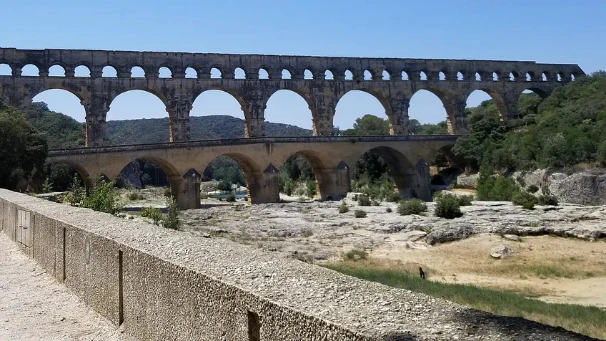
Five things households get wrong
01 They keep the papers, not the map. The statements exist. The page that says how many accounts there are, and in which countries, does not.
02 They treat it as an estate task. It gets filed mentally under wills, and therefore under later. But the far more common events are a hospital stay, a lost phone, a work trip that runs long, a frozen account. None of those involve dying.
03 One person holds all of it. Usually the one who “does the money.” Every household has one. The risk is not that they are careless — it is that they are the only copy.
04 They record the account, not the access. The institution is known. The login is not. Nor is the answer to a security question set nine years ago, nor the fact that the verification code still goes to a phone number in a country the household left.
05 They write it once. A map written three years ago is a map of somewhere the household has left. It needs a date on it, and a habit.
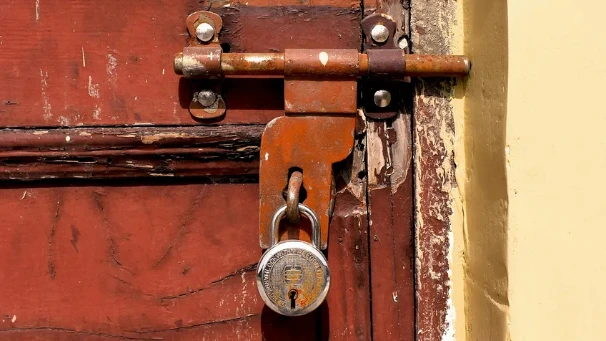
Why a cross-border life changes this
A household that has lived in one country has one set of institutions, one language of paperwork, and one process for releasing an asset to someone who needs it.
A household that has lived in three has three of each. Three regulators, three sets of identity requirements, three definitions of who is allowed to ask. What satisfies a bank in one country will not always satisfy one in another.
There is also the address problem, and it is more consequential than it sounds. Institutions write to the last address they hold. A dormant account in a country left behind may have been trying to reach the household for years, at a flat someone else now lives in.
And there is the phone. Two-factor authentication anchors access to a number. A number is issued by a telecoms company in a specific country, and it stops working when the contract does. An account can be perfectly solvent, perfectly legal, entirely the household’s own — and unreachable.

A better starting point
Consider an example — hypothetical, but familiar. A couple we will call the Harpers have lived in the UAE for eleven years, after six in Singapore and a childhood each in the UK.
He knows where everything is. Not because he is secretive, but because he has always been the one who opens the letters. She could name their bank and their insurer. She could not name the pension provider in Singapore, and neither of them could say with confidence whether the UK account opened in 2009 is still open.
Nothing is wrong. Nothing has gone missing. They are simply one accident away from a search rather than a handover.
The fix is not complicated, and it is not a product. It is an afternoon and a single document. What exists. Which country it sits in. Who to contact. How it is reached, including the phone number the codes go to. And a date at the top, so the next version has something to replace.
Then one other person knows it exists, and where.
A plan is not only what you own.
It is whether anyone else could find it.
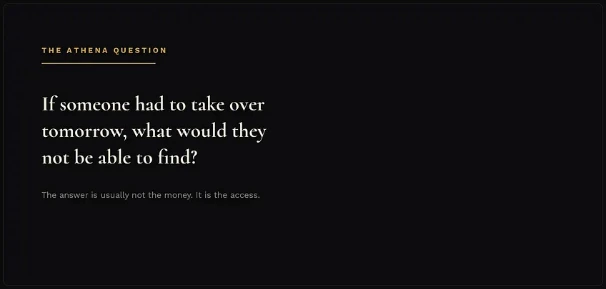
The Athena Question
If someone had to take over tomorrow, what would they not be able to find?
The answer is usually not the money. It is the access.
Independent wealth consulting for internationally mobile professionals
@athena_capital_consulting
Cross-border wealth, made clear.