

The Athena Letter
Which currency does
your plan assume?
Sunday 18 October 2026
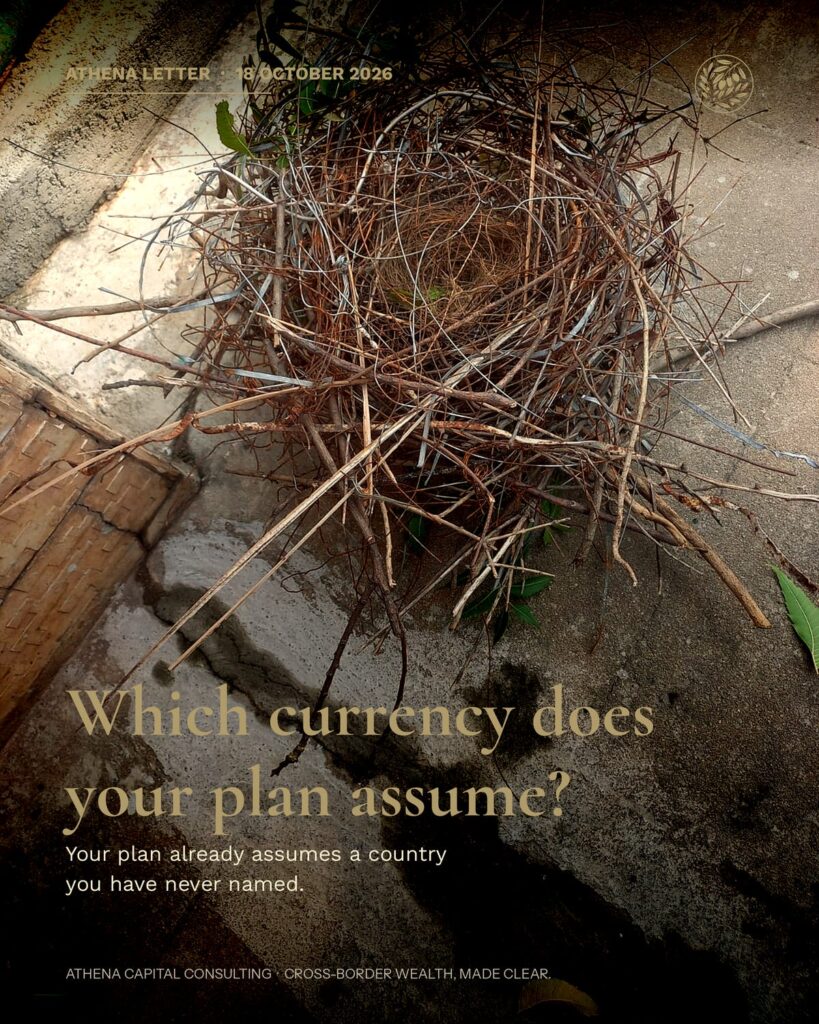
A nest, photographed on a concrete step. Empty. Built out of two things: dry twigs, and wire.
Not a little wire. Wire running all through it — rusted strands and bright ones, curled in among the sticks until it is hard to say which material the nest is mostly made of.
The bird did not decide to build with wire. Wire was what was lying about.
That is all of it. Nothing to admire, and nothing to learn from a bird. Just a thing assembled out of whatever was within reach of the place it was built in.
What your plan was actually built from
Financial plans are assembled the same way, and almost nobody notices. Think about what was within reach when yours was put together.
If you live in the UAE, you are paid in dirhams. The dirham is pegged to the US dollar at a fixed rate. So the money you save here is dollar-linked, whether or not that was ever a decision. It simply is.
The investments available to you are the ones your platform carries. The default currency of your account is the one the account arrived with. The products you were shown are the products someone in this market sells.

One trunk. A hundred leaves, no two from the same cloth.
None of that is wrong. All of it is unchosen.
The assumption only matters when the spending moves
An unchosen assumption is perfectly fine, right up until the day your spending moves somewhere else.
Because the thing a plan quietly commits you to is not what you own. It is where the money will eventually be spent.
A household saving in dollar-linked dirhams and returning to the UK will spend in pounds. One going to Canada will spend in Canadian dollars. One staying here — and staying is a real choice, not a failure to leave — will go on spending in dirhams, which is the single case where the assumption and the answer happen to match.
Your plan does not know which of those you are. It has assumed one, by default, out of what was available in the place where it was built.
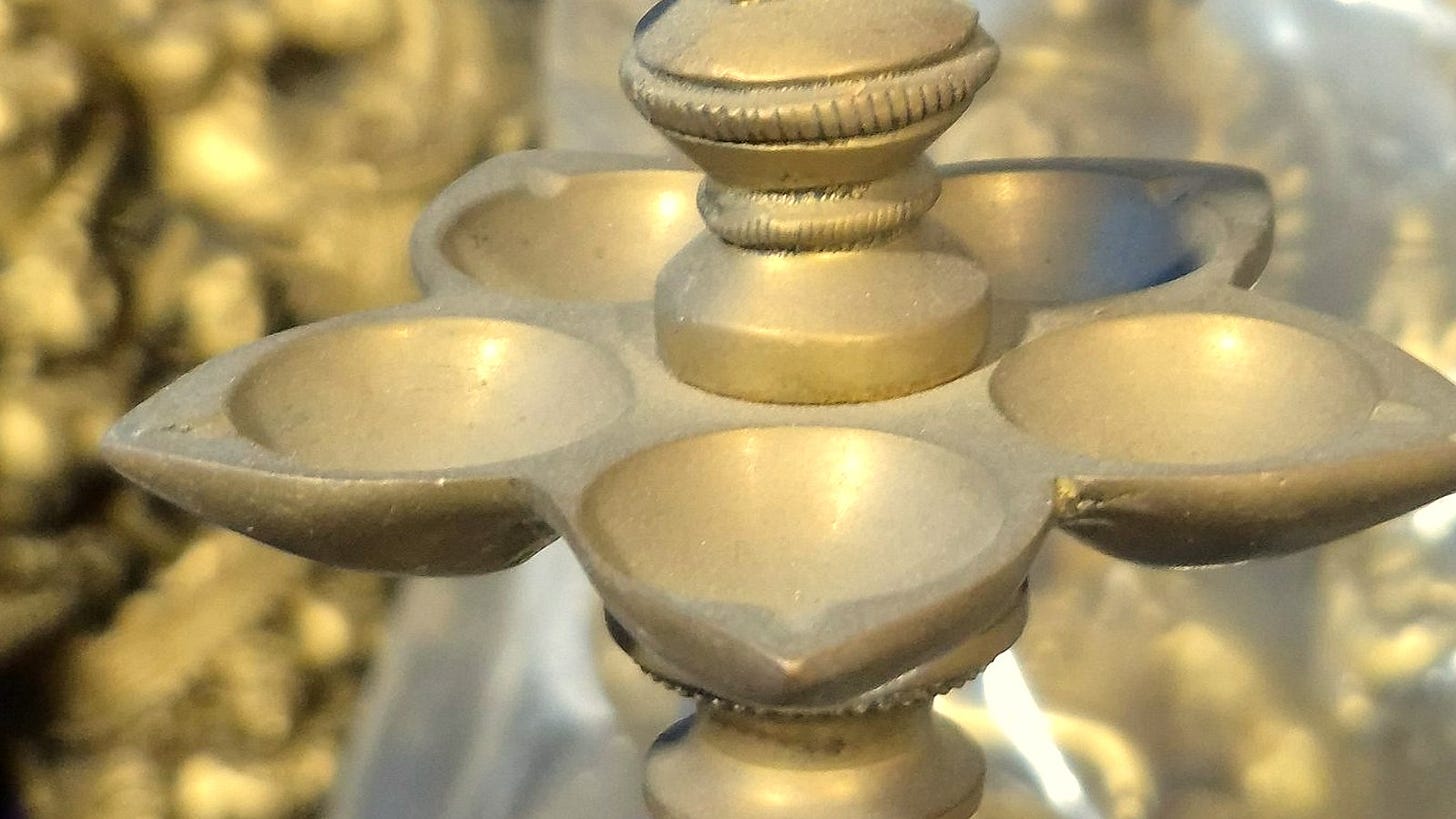
An object made in one place, bought in another, used in a third.
Which currency you hold is not the question
So the question is not which currency you hold. It is which currency you intend to spend the rest of your life in.
You do not have to answer that today. Most people honestly cannot. The date moves. The country changes. The children end up somewhere nobody predicted.
But you can notice that your plan has already answered it on your behalf — and you can find out what answer it gave.

The lines were already in the floor before anyone chose where to stand.
A better starting point
Noticing is a different thing from changing anything. It is only the difference between an assumption you made and one you inherited from a postcode.
A plan built out of what was nearby is not a bad plan. It is a plan with an assumption inside it that nobody has said out loud.
Say it out loud.
A plan is built in the currency you earn.
It is judged in the currency you spend.
The Athena Question
Which currency do you intend to spend most of your life in — and does your plan know?
Worth writing down before anything else is decided.
Independent wealth consulting for internationally mobile professionals.
@athena_capital_consulting
Cross-border wealth, made clear.